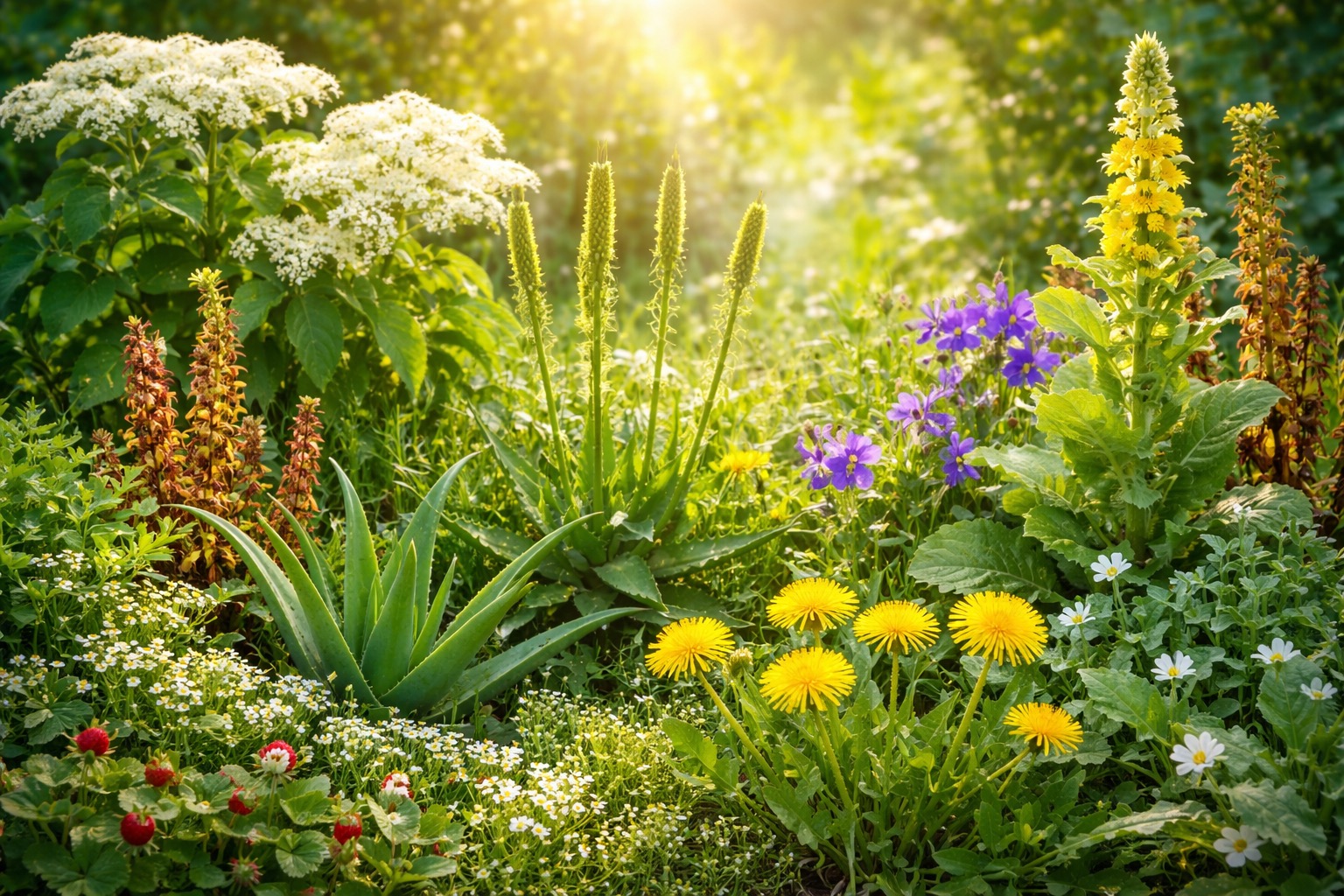
 As a forager and hiker I have always enjoyed the woods, exploring pastures and everything within them. I have studied how ecology works sitting beneath the trees alongside all the wonders of nature. I have spent countless hours exploring plants, researching, studying and consuming.
In this series we will discuss weeds, their purposes, and ways to incorporate them into our lives.
There’s a quiet humility in learning from what we once pulled out and threw away.
The same ground we try to “clean up”…
is often trying to feed, heal, and restore us.
And sometimes the question isn’t:
“Why are these plants here?”
But rather:
“What have we forgotten to see?”
Not every “invasive” plant or “weed” is harmless everywhere—some can genuinely disrupt ecosystems when introduced unnaturally.
But that doesn’t make them evil or useless.
It means:
A plant out of place still has purpose—just not always in that specific environment.
For centuries weeds were simply what they were created to be.
Food and medicine.
These plants were also created to be life sources for many pollinators, birds, animals and more.
These plants were created to do their part in the world. Like many of us, they, too, have jobs to do. It is mankind that has long forgotten what these jobs are for these misunderstood and often overlooked plants.
I’ve learned if it’s been marked “invasive” or a “nuisance” it’s most likely a medicinal plant.
Where did society go wrong? Why, after so many centuries, has society begun deeming these useful gifts of plant life as nuisances and useless? Who began this thought process and what can we do to change the course back to how GOD intended?
By discussion. By knowledge. By understanding. By sharing.
The answer is less about a single mistake and more about a shift in how humans relate to land, control, and value.
For most of human history, people lived close to the land. What we now call “weeds” were simply plants with purpose:
- Food in lean times
- Everyday medicine
- Soil restoring agents
- Habitat for pollinators and animals
Plants like dandelion, plantain, chickweed, lamb’s quarters—these weren’t nuisances.
They were providers.
The shift began when society moved from relationship with the earth to control of the earth.
Let’s discuss this shift and how we can find a way back to our relationship with creation as God intended.
So what exactly did happen to change the natural way of life?
Agriculture became industrial
Instead of diverse ecosystems, we created monocultures—fields of just one crop.
Anything that competed with that crop?
It became labeled a problem.
That’s when the word “weed” really took on its modern meaning:
A plant growing where humans don’t want it.
Not useless—just inconvenient to a system.
Before the 1900s, most farms in America were:
- diverse
- seasonal
- locally focused
Farmers grew many crops and animals because it reduced risk and fed their families.
Then came industrialization—and with it, policy support for large-scale production of a few key crops.
One of the biggest turning points is the United States Farm Bill.
Beginning in the 1930s (during the Great Depression), the government introduced subsidies to stabilize struggling farmers.
The intention was good:
- prevent farm collapse
- ensure food supply
- support rural economies
But over time, the structure evolved in a very specific direction.
What gets subsidized?
Primarily:
- corn
- soybeans
- wheat
- cotton
- rice
These are called commodity crops.
Farmers are financially rewarded for growing:
more of the same crop, over and over
Which naturally leads to:
- monocultures (thousands of acres of one plant)
- reduced biodiversity
- dependence on fertilizers and herbicides
Mid-20th century policy and leadership—especially under figures like Earl Butz, U.S. Secretary of Agriculture (1971–1976) pushed a new philosophy:
“Plant fence row to fence row.”
This meant:
- maximize production
- specialize in one or two crops
- scale up operations
Smaller, diverse farms struggled to compete.
Then came the rise of chemical control
In the 20th century, especially after events like the World War II, chemical industries repurposed wartime compounds into herbicides.
This led to the widespread use of products like Roundup.
From there, a powerful idea took hold:
- “Wild plants are dangerous”
- “Clean land = controlled land”
- “Nature must be managed”
That messaging shaped generations and warped our view of natural landscaping.
Government-backed research and policy also encouraged:
- synthetic fertilizers
- pesticides
- herbicides
Institutions like United States Department of Agriculture supported agricultural efficiency and yield increases.
This worked—but it also:
- reduced reliance on natural soil cycles
- made farms dependent on external inputs
- reinforced monoculture systems
Policies promoting exports pushed farmers to produce:
- large quantities
- uniform crops
- shelf-stable commodities
It’s much easier to export:
- corn
- soy
than a diverse mix of seasonal foods.
So diversity gave way to uniformity and scale.
So where do “weeds” fit into this?
In a monoculture system, anything that:
- competes for nutrients
- interrupts harvesting
- reduces yield
…is labeled a problem.
That includes many of the plants I will be writing about such as:
- dandelion
- purslane
- lamb’s quarters
In a different system, those same plants would be:
- food
- medicine
- soil helpers
But in monoculture, they are:
economic threats to efficiency
It’s easy to frame this as “government ruined farming,” but that’s too simple—and not entirely accurate.
These policies also:
- prevented famine
- stabilized food prices
- allowed the U.S. to feed millions
The real issue is:
the system is optimized for yield and efficiency—not ecological balance or nutritional diversity.
Now we are experiencing loss of ancestral knowledge
Herbal wisdom didn’t disappear overnight—it was slowly pushed aside.
In many parts of the world, especially in Europe during periods like the European witch hunts, traditional healers (many of them women) were silenced.
Later, modern medicine and convenience culture replaced:
- foraging
- home remedies
- plant literacy
What used to be common knowledge became “alternative.”
Then aesthetic culture took over
Lawns became a symbol of order, wealth, and control.
A perfect green yard meant:
- no “mess”
- no unpredictability
- no wildness
But here’s the irony…
A lawn with no weeds is often:
- biologically poor
- lacking pollinator support
- dependent on chemicals
Meanwhile, the “weeds” people remove are often:
- mineral-rich foods
- first responders for damaged soil
- medicine growing freely
Were these plants “created” with purpose?
Creation is intentional, interconnected, and sufficient.
Even in ecology (the scientific side), we see that so-called weeds are:
- Pioneer species — they heal disturbed soil
- Nutrient accumulators — pulling minerals up from deep layers
- Indicators — telling you what the soil needs
They don’t show up randomly.
They show up on assignment knowing they have a job to do, a purpose to fulfill.
So where did society go wrong?
Not in one moment—but in a gradual forgetting:
- We traded stewardship for control
- We replaced relationship with efficiency
- We chose uniformity over diversity
- We lost trust in natural systems
And maybe most importantly…
We stopped asking:
“What is this plant here to do?”
and started saying:
“How do I get rid of it?”
We need to get back to regenerative agriculture.
Farming methods that:
- restore soil health
- reintroduce biodiversity
- reduce chemical dependence
We need to get back to supporting small & local farms
Diversified farms are:
- more likely to grow multiple crops
- more open to “wild foods”
- closer to traditional practices
We need to change our perception
When people begin to see:
- “weeds” as food
- land as living
- diversity as strength
…the demand shifts.
And when demand shifts, systems follow.
Monocultures did not happen by accident.
They were built—policy by policy, incentive by incentive—until diversity became inconvenient and uniformity became profitable.
I pray you enjoy learning and growing as we adventure into the world of WILD FOODS and so much more.
I have spent many years sharing knowledge with others along my journey towards better health and wellness. Now I feel a strong desire to begin sharing more with all of you.
I’d like to thank my friends and my biggest cheerleaders for sticking with me through the years as I learned and grown. I hope all future posts can be a blessing to many, but all is worth it if only just one is positively affected.
Thank you for caring about your temple and desiring a happier, healthier, stronger life for yourself and your loved ones.
Until next time, my friends, be gentle with yourselves, live your life with the greatest of intentions and choose to love abundantly.
For we are ALL worth far more than rubies.
You are loved.
BIG LOVE,
Char~